When we mention Spain as a holiday destination many of us initially think of the beaches and the lines of sun-beds of the classic Mediterranean resorts of the Costa del Sol and the Costa Brava. Understandably so, relaxing on the golden sands of a sun-drenched beach does sound enticing, especially after the year we’ve had.
Thankfully, next year is looking much better however you may still be slightly hesitant to return to those busy holiday resorts. Also, after being cooped up for months, you probably want more from your next trip. Personally, we want to explore the countryside and escape those crowds, immerse ourselves in the region’s culture and of course, try the local food and drink. One destination you may not have previously considered but perfectly fits the new travel criteria is the Spanish Region of Murcia,

Like us, you’ve probably heard of Murcia but may not be fully aware where it is in Spain and exactly what it has to offer. The historic Region of Murcia lies in the southeastern part of Spain and has its own stretch of Mediterranean coastline known as the Costa Cálida. We first visited towards the end of 2019 and were pleasantly surprised at what we discovered. Less than an hour from Alicante Airport, as the sun was setting behind the mountains, we were driving through the serene Murcian countryside with its citrus orchards, olive groves and vineyards.
So as the option of travelling again is fast approaching, we look back at our trip and discuss our personal recommendations for touring the fascinating Region of Murcia. Hopefully, inspiring you to visit this beautiful and unspoilt region of Spain very soon.
Getting There And Getting Around
Getting to Murcia is quick and relatively inexpensive, the region does have its own airport, the Aeropuerto Internacional Región de Murcia. Neighbouring Alicante airport also has plenty of cheap flights from many UK regional airports.
A rental car is essential but make sure it’s a small one. Those Murcian village roads and medieval town centres weren’t designed for oversized 4 by 4s. So from our experience after nearly getting jammed on a little mountain village road, if the car rental company does offer you an upgrade, politely decline.
Where To Stay
Whether you want to stay in the city of Murcia itself or base yourself in the beautiful and relatively unexplored Valle de Ricote, there are plenty of options available. All within 60 to 90 minutes drive from Alicante Airport.
We opted to stay in the historic city of Lorca, also known as the ‘baroque city‘ due to the number of preserved ornate, baroque-style buildings.
Lorca
As you approach Lorca you’ll first spot the impressive medieval Lorca Castle sitting on a hill overlooking the town. It was altered and remodelled over the centuries and was a key strategic point of contention between the Christians and Muslims.

You can actually stay within castle grounds at the Parador de Lorca. Under the luxury hotel, you can find Muslim architectural remains as well as remnants of a 15th-century synagogue which were discovered during the construction of the hotel.

As mentioned, Lorca is often referred to as the ‘baroque city‘ and as you wander the city’s streets. The reason for the name is clear to see. However, if there is one major event Lorca is famous for, it’s the spectacular Holy Week processions known as the ‘Semana Santa de Lorca’.
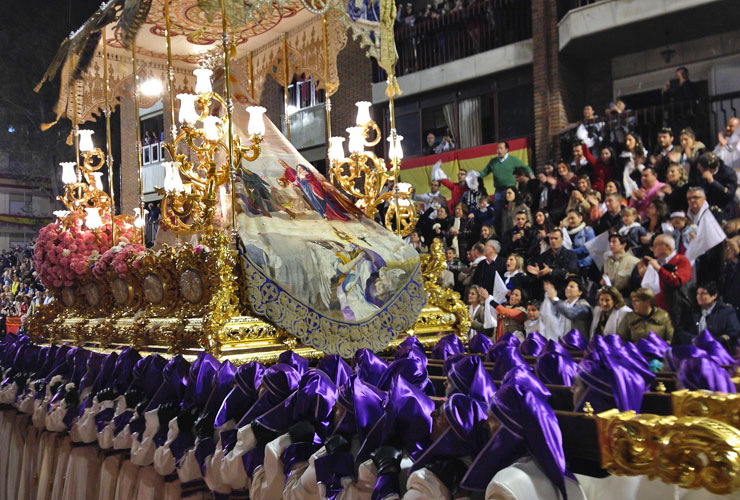
If you live in Lorca, then you either support the ‘whites’ or the ‘blues’ the Paso Blanco or the Paso Azul. During the festival, these rival brotherhoods try to outdo each other with their ornate embroideries and displays of horsemanship. It’s like a football match on derby day.
You don’t have to wait until Easter to see these elaborate creations as both brotherhoods have embroidery museums in the city. MuBBla, the Museo de Bordado Paso Blanco and MASS, the Museo Azul De La Semana Santa.
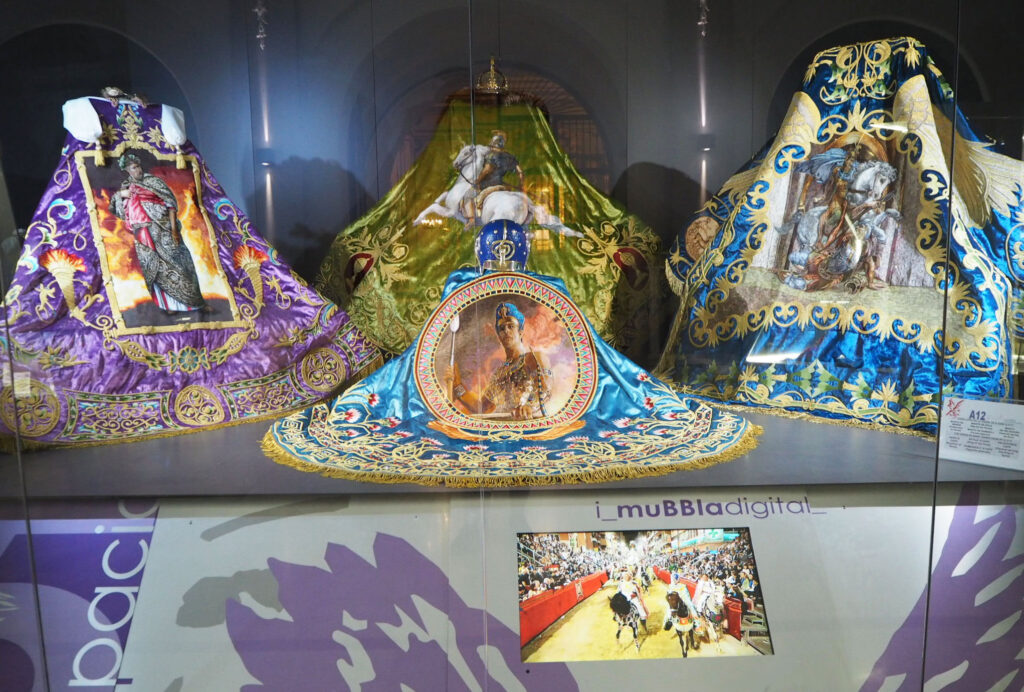
I know the term ‘Embroidery Museum‘ doesn’t instantly sound like museum many of us would contemplate visiting but trust us, the embroidered robes and the craftsmanship involved in their making are outstanding. Both museums are definitely a ‘must visit’.
The Vineyards Of Bullas, Jumilla And Yecla
When you’re in wine country you have to visit a vineyard are two. For us, the main problem is deciding who’s going to be the dedicated driver for the day. The wine region of Murcia has three Denominación de Origen, Bullas, Jumilla, and Yecla, within which a variety of wines are produced.

We visited the DO of Bullas towards the northern part of Murcia. This area is best known for the grape variety, Monastrell but they also grow Tempranillo and Macabeo. Although it was slightly overcast when we visited, the sight of the mist rolling off the surrounding hills was stunning and more importantly, so was the wine.
Many of the vineyards offer reasonably priced tours and tastings but if you still can’t agree on the driver (despite the arguments). There are some guided tours with transport available from the city of Murcia.
Murcia City
You can’t visit the Region Of Murcia without visiting the university city and capital of the region, Murcia. The city was founded in 831 by Abd-Al-Rahman II and although there are still architectural elements of this early Moorish rule the city does feel very Spanish with its elegant plazas and baroque buildings and cathedral.

Highlights for us were the Murcia Cathedral, full name Cathedral Church of Saint Mary in Murcia, a superb gothic and baroque mix of architectural styles complete with its 300-foot bell tower.
Not far from the cathedral is a reminder of Murcia’s grand aristocratic past, the Real Casino de Murcia. This was established in 1847 as a private social club and has recently been restored to its full former glory.

Despite still being a private members club visitors are very welcome, there is public access to most rooms on the ground floor. Inside you’ll find an Arabic lounge, an English library looking like it’s straight out of a Harry Potter book and a grand ballroom complete with mirrors and chandeliers.

Archena
One aspect of Murcia which we were not aware of before our visit were the natural hot water mineral spas which date back to Roman times. These can be found a short distance north of Murcia in Archena, a small town in the beautiful Valle de Ricote.
With its spas and abundance of fresh fruit and vegetables, it’s no wonder that the Ricote Valley locals have the longest and healthiest life expectancy of anywhere in Spain.

We spent an afternoon at the Balneario of Archena, a complex of thermal spas, pools and treatment rooms overlooking the Segura River. Just like the Carthaginians, Romans and Arabs who all knew about the beneficial properties of the warm thermal waters, you can relax and unwind in the sedate surrounding of the Ricote Valley.

As well as the thermal spas, Archena is the perfect spot to base yourself if you want to take advantage of the many hiking trails through the Ricote Valley.
We only touched the surface of what the region has to offer during our short stay. So, if you’re looking to escape the usual tourist crowds and soak up some genuine Spanish culture, enjoy the excellent food and drink or relax in the sun, then Murcia is the destination for you.
If you want to see more of Murcia and all that it has to offer then check out the following tags on your favourite social media channel #VisitMurcia #CostaCálida #RegióndeMurcia.

Touring The Heart Of Murcia – Pin For Later
This post is produced in cooperation with the Región de Murcia Tourist Board although all opinions are our own.