
Imagine trying to unravel a complex crossword puzzle with no clues or hints provided; this is how the tax system for UK remote workers travelling across borders can feel like.
A real-life story of Sam, a digital nomad hailing from Manchester, adds layers to this baffling prospect. He once found himself staring at a monumental tax bill after his six-month Spanish escapade. If, like Sam, you’re navigating the uncertain waters of remote employment while globetrotting, it’s crucial to understand how to manage your taxes aptly and avert such costly surprises. This blog post serves as your comprehensive guide on “UK Remote Workers: How to Manage Your Taxes While Travelling”.
Faris Khatib from Ideal Tax, a tax relief firm further explains that working remotely while travelling overseas can have significant tax implications for both UK workers and their employers. Depending on various factors such as double taxation agreements and tax residency status, the income earned by non-resident workers could be taxable in the UK, taxable in an overseas country, or not taxable at all. To ensure compliance with tax laws and regulations, it is important for remote workers to understand their tax residency status, potential withholding obligations, and the applicable tax rules in both the UK and the country where they are working. Seeking professional advice or consulting with relevant tax authorities may also be necessary to avoid unexpected liabilities and penalties.
Understanding Tax Residency As A UK Remote Worker

As a UK remote worker, you might find the concept of tax residency to be quite confusing. However, it is important to understand it to avoid any unintended tax liabilities. Tax residency refers to the country where you are considered liable to pay taxes on your income. If you are a UK resident for tax purposes, then you will need to pay tax on your global income in the UK, regardless of where the money was earned.
Understanding your tax residency status involves considering several factors such as the amount of time spent in the UK or overseas, your connexions with both countries, and whether or not you have a permanent residence in another country. For example, if you spend more than 183 days in the UK per year, then you are likely to be considered a UK tax resident.
To illustrate further, let’s say that Tom is a freelancer who has been living and working remotely from Thailand for eight months out of the year. He also has a rented flat back in London but doesn’t spend enough time there during the year to maintain it as his primary residence. In this case, Tom would likely be considered non-resident since he hasn’t spent more than 183 days in the UK during that tax year.
It’s important to determine your tax residency status accurately because it affects how much tax you’ll pay and whether or not you’re eligible for certain benefits. As such, identifying if you’re resident or non-resident can help you avoid potential penalties for failing to pay taxes correctly.
Now that we’ve established what it means to be a UK resident for tax purposes let’s examine how to acquire or break residency certificates as a remote worker.
Acquiring And Breaking UK Tax Residency
Acquiring or breaking UK tax residency can lead to potential changes in taxation. It’s an essential factor that remote workers should consider before deciding to work abroad. To acquire or break UK tax residency, you should understand how the UK government determines your status.
For example, suppose you’re planning to move abroad for a longer period and want to break ties with the UK to avoid paying taxes there. In that case, you need to prove to HMRC that you have severed all significant ties to the country, such as disposing of your UK property and bank accounts or terminating your business affairs. You may also need to provide evidence of your permanent residence in a foreign country.
On the other hand, if you are planning on returning to the UK after working abroad, it’s important to become familiar with the criteria for being considered a resident again. In general, you would usually regain UK residency if you spend more than 183 days in the UK during any given tax year or if you maintain be significant economic ties with the United Kingdom e.g., having investments, ownership or employment.
Changing residency status is like switching from one boat to another; it can be very choppy waters, and mistakes can be costly if not orchestrated properly. Therefore, a good starting point is always consulting with a qualified tax advisor who can guide you through the complexities involved.
Understanding how and when to acquire or break residency is essential for managing your finances while travelling overseas. Misunderstanding your residency status can lead to unnecessary taxation and legal issues in both the home and host countries.
Now that we’ve established how tax residency works let’s now examine how working overseas affects your taxes as a UK remote worker.
- It is crucial for remote workers to understand the process of acquiring or breaking UK tax residency as it can have significant implications on their taxation. To break ties with the UK and avoid taxes, one needs to sever all significant ties with the country and provide evidence of permanent residency in a foreign country. If planning on returning to the UK, one should become familiar with the criteria for regaining residency. Changing residency status is complex, and consulting with a qualified tax advisor is highly recommended. Misunderstanding your residency status can lead to unnecessary taxation and legal issues in both home and host countries.
Implications Of Overseas Work On Taxation

As a UK remote worker travelling abroad, it is important to understand the tax implications of working overseas. When you work in another country, you may be subject to income tax in that country as well as in the UK. This means that you may have to pay taxes on your income twice if there is no double taxation agreement in place between the UK and the country where you are working.
It is important to note that tax laws vary from country to country, and therefore, it is essential to research the local tax laws of the country you plan to work in. In some countries, you may be able to deduct some expenses related to your work, such as travel or accommodation costs. However, in other countries, you may not be entitled to any deductions or credits.
For instance, let’s say that you are a freelance writer working remotely for a UK-based company and temporarily staying in France. You will need to report your income from your employer in the UK and file a tax return for this income with HM Revenue & Customs (HMRC). Additionally, you will need to report your earnings from clients based in France and file an income tax return with the French tax authorities.
It can get complicated when working for multiple employers or clients based in different countries while travelling overseas. Thus, staying informed about local regulations will help you avoid possible legal consequences.
Knowing all of this information makes it clear that one should always aim at asserting their tax status and avoid any penalizations arising from ignorance regarding foreign tax statutory laws.
Double Tax Agreements And Their Role
Double taxation agreements (DTAs) provide relief for individuals who are subject to taxation in two countries on the same income. These agreements aim at enabling residents of one country who earn income from another country exempted from being taxed on the same income twice. DTAs also help reduce overall taxation on the residents of each party.
Understanding DTAs can be compared to a society’s recycling policies. Just as how countries have local tax laws that vary from others, local waste management regulations similarly differ from one area of the world to another. However, like how waste management firms in some areas provide recycling dumpsters while other regions don’t have such a facility accessible. Likewise, some countries may have DTAs agreements with others, while others won’t allow this convenience.
There are particular eligibility criteria for obtaining DTA advantages. Requirements include and are not limited to individuals being a tax resident in one country, earning taxable income or deemed taxable income from sources outside of the country of residence, among other stipulations.
For instance, the UK has over 130 double taxation agreements that cover issues including taxes on income, corporation taxes, inheritance taxes, and pensions. Understanding these treaties is essential for any UK remote worker intending to perform work duties abroad.
Knowing how a Double Taxation Agreement can benefit you makes it imperative that you acquaint yourself with whether your work destination has one signed into law with the UK.
- A recent survey conducted in 2021, revealed that nearly 60% of UK employers have experienced tax compliance issues due to their employees working abroad.
- PwC research shows that prior to the pandemic, less than 20% of workers were considered ‘remote’. In 2023, this figure has risen to over 40%, increasing the complexity of cross-border tax implications for both employees and employers.
- According to an Office of Tax Simplification report (OTS), around 75% of UK companies are unprepared for the tax responsibilities associated with overseas remote working by their employees.
How Travel Influences Taxes For UK Remote Workers
As a remote worker, it’s easy to blur the lines between work and travel. However, when it comes to taxes, there are certain rules you need to follow. When you’re travelling overseas, your tax situation will depend on your tax residency status in the UK and whether or not you’re considered to be earning income from foreign sources.
If you remain UK tax resident while travelling overseas, any foreign earnings will still be taxable in the UK. On the other hand, if you become a tax resident of another country while abroad, different rules may apply. Additionally, double taxation treaties between the UK and other countries may impact how your income is treated for tax purposes.
For instance, let’s say you’re a writer living in Thailand for three months out of the year to find inspiration for your work. During this time, you continue writing articles for your UK-based employer and earning an income. Since you’re spending less than six months in Thailand, you won’t be considered a Thai tax resident. Therefore, your income should still be taxable in the UK, as long as you maintain your UK tax residency.
If that’s not the case and your tax residency changes while you’re travelling or living abroad, then what expenses can be deducted from your taxes?
Deducible Expenses For Global Nomads
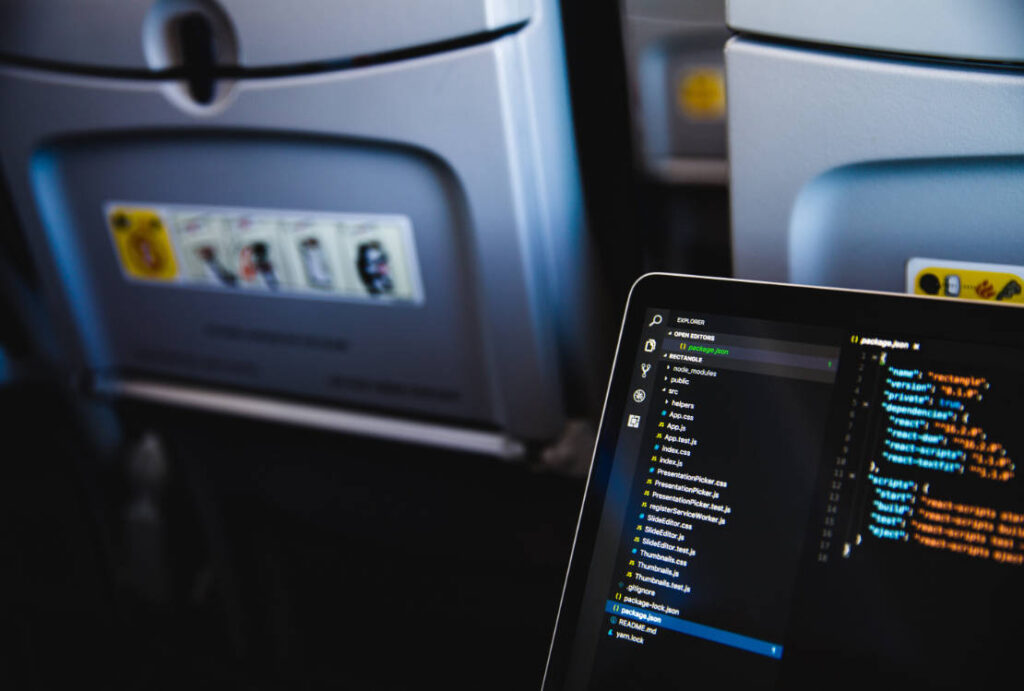
When working remotely or living abroad, there are specific expenses related to travel that can be deducted from your taxes. However, knowing which expenses qualify as deductible can be complex since some rules vary by country.
For example, if you find yourself travelling frequently for business purposes, such as attending conferences or meeting with clients face-to-face in other countries, these expenses may qualify as deductible. Flights, hotels, meals, and other necessary business-related expenses incurred during qualifying trips can generally be written off against your taxable income.
An example of a qualifying expense would be if you’re a freelance web developer tasked with attending a conference in San Francisco to promote your services. Since this trip is directly related to your business, the airfare, hotel costs and meals during your stay can all be deducted against your UK taxable income.
However, it’s important to note the “necessary” part. You cannot deduct expenses that are deemed unnecessary or personal in nature such as sightseeing trips. Additionally, self-employed individuals have different rules when it comes to what they can and cannot claim as business-related expenses.
It can be tempting to write off all travel expenses when working remotely or living abroad. Still, keeping proper records and understanding which deductions are available will benefit you in avoiding any mistakes that could lead to more substantial tax liabilities.
Filing Tax Returns: Tips For UK’s Outbound Remote Workers
Filing tax returns can be a daunting task, especially if you’re an outbound remote worker. To ensure compliance and avoid potential issues with the tax authorities, it’s important to stay informed of all the applicable rules and regulations. Here are some tips to help you file your tax returns as a UK remote worker travelling overseas.
Firstly, it’s crucial that you keep detailed records of your income and expenses throughout the year. This includes documenting all earnings from your employer, any freelance work you may do, as well as any eligible business expenses such as travel, accommodation or office supplies. By keeping these records organised, you’ll have a clear understanding of what needs to be reported and will be able to file accurately and efficiently.
Secondly, make sure you’re fully aware of the deadlines for submitting your tax forms. As an outbound remote worker, you may have different filing requirements depending on where you are in the world. It’s essential that you research this in advance and make sure you adhere to all relevant deadlines to avoid penalties.
Thirdly, don’t forget about potential deductions when filing your tax returns. Expenses for global nomads can quickly add up, from flights to visas to insurance costs; it’s important you document all eligible expenses to claim them back later. However, be sure to review what is considered admissible by HMRC; this means that while some costs may seem logical for your work abroad – like sightseeing – HMRC often does not accept them as legitimate business expenses.
In addition to the previous points above; think about consulting with a UK-based accountant who specialises in international tax. They can provide guidance on specific country requirements and advise on how best to maximise deductions available to remote workers travelling abroad. Think of it like this: going to an accountant is like having a personal trainer, you can do your taxes yourself without them, but they save you from costly mistakes and ensure your affairs are in the best form.
Filing tax returns correctly is critically important for outbound remote workers. By developing a proactive approach and staying informed of all relevant requirements, you can manage your taxes while travelling with confidence. Remember to stay organised throughout the year with records of your expenses, keep abreast of deadlines that may be different depending on where you are, claim admissible expenses back but do not stretch them too far. And finally, consider consulting with a specialist accountant who knows international tax to help maximise deductions and minimise any potential liabilities.