
When you visit a new city it’s often good to take a guided tour to familiarise yourself with the place. Usually, these can be fun and informative but on that rare occasion, you’re lumbered with an uninterested student on a gap year who flew in a week before you.
Sometimes, there’s not a tour available or you just want to wander the streets at your own pace. Luckily, there is an increasing number of self-guided audio tours available and one of these, ‘The Bristol Quayside Adventure’, I chose to try when visiting the historic Bristol harbour. The tour introduces you to the people, places and buildings which are said to have inspired Robert Louis Stevenson’s classic pirate tale Treasure Island, one of my favourite books as a kid.
‘The Bristol Quayside Adventure’ is available to download here – Audio Tours Of Bristol. There are a number of other audio tours available including a literary trail and a Brunel tour.
So let’s run through the main stops on the Bristol quayside walk.
The Merchants Venturers Almshouses, King Street
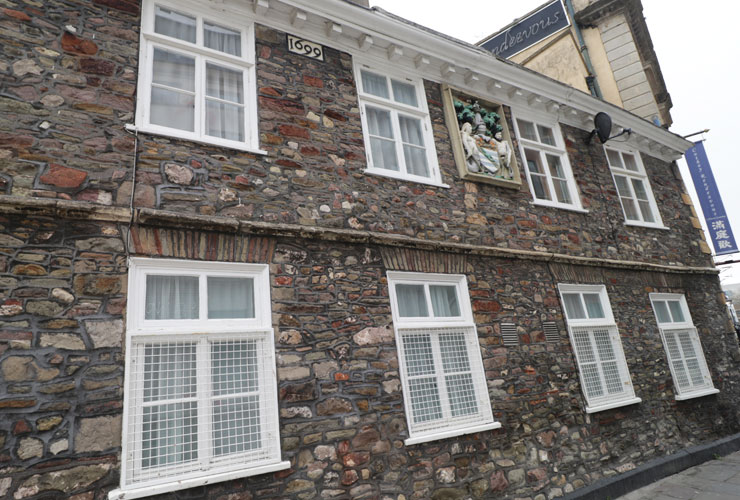
Dating from the 17th century, the Bristol Society of Merchant Venturers built these almshouses for blind, sick and retired sailors. William Williams died here in 1791, he was a painter, a writer and was a sailor during the early part of his life.
Williams wrote the novel ‘The Journal of Llewellin Penrose, Seaman’ about a sailor who was cast away in the New World and believed to be partly autobiographical.
The Theatre Royal, King Street
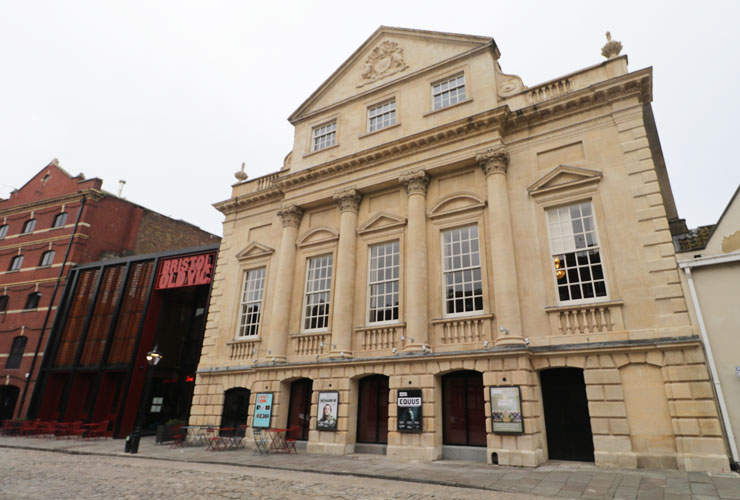
The Grade I Listed Old Vic Theatre in King Street, Bristol was opened as the Theatre Royal in 1766. It is the oldest continually-operating theatre in the English-speaking world. There was a lot of local opposition to its opening including from the Methodist minister John Wesley. He said it would encourage “Drinking, debauchery, indolence, effeminacy and idleness”, which all sound fine with us.
The Llandoger Trow
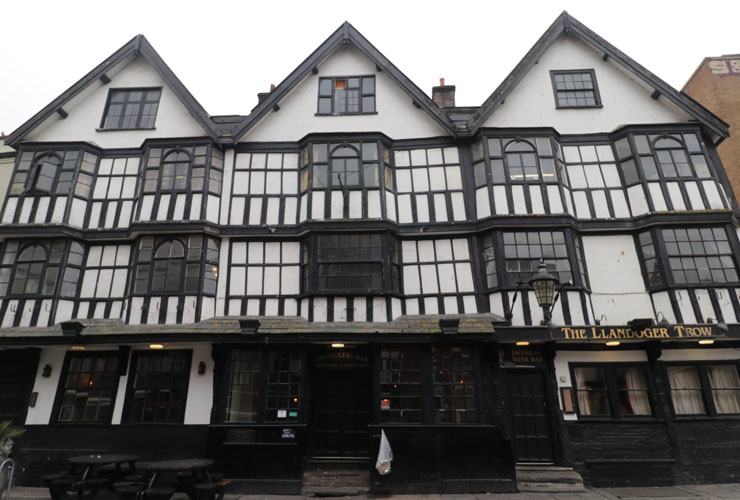
On King Street, you’ll also find The Llandoger Trow a historic pub which dates back to 1664. It’s said that Daniel Defoe met Alexander Selkirk at the pub. Selkirk was his inspiration for Robinson Crusoe. The pub itself claims to be Robert Louis Stevenson’s inspiration for the ‘Admiral Benbow’ in Treasure Island.
Welsh Back

At the end of King Street is the Welsh Back. This was a stretch of the original Bristol Harbour which concentrated on local coastal trade especially from Wales. Hence the name change of the area from the original St Nicholas Back to the Welsh Back. In Treasure Island, this is quayside where Squire Trelawney meets Long John Silver and buys the Hispaniola.
Queen Square
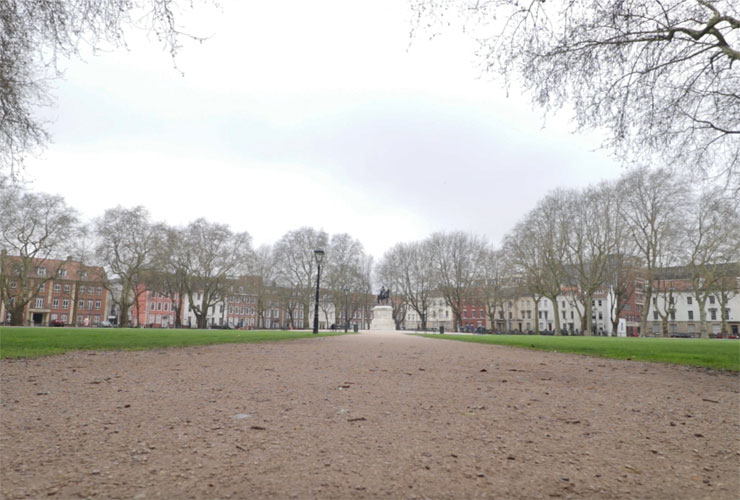
Queen Square is an elegant Georgian Square not far from the Bristol quayside however since its construction it’s suffered mixed fortunes The square was named in honour of Queen Anne who visited Bristol in 1702. In 1831 the square was the centre of a riot in which half the buildings were destroyed. In the 1860s, the square nearly became the site of Bristol railway station. It wasn’t until the 1990s that the square and the gardens had been fully restored to their former glory.
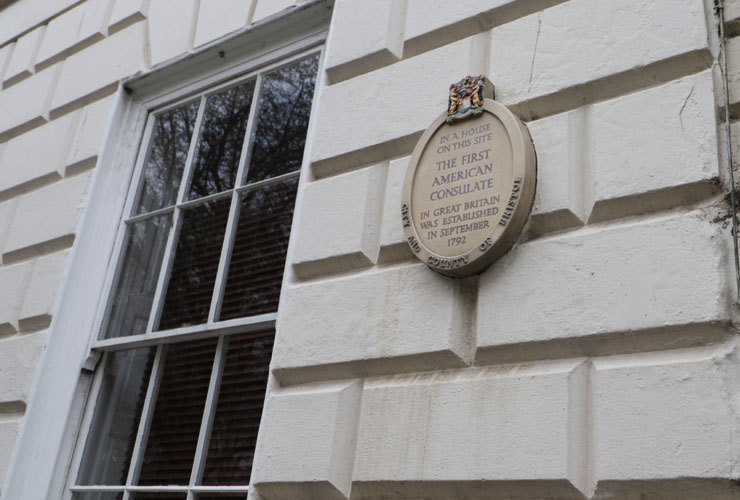
The square had some interesting residents including Woodes Rogers, a privateer who circumnavigated the globe in 1707-1711 and rescued Alexander Selkirk (the inspiration for Dafoe’s Robinson Crusoe).
At 37 Queen Square is the former site of the first overseas consulate for the USA which was established in 1792.
Redcliffe Caves
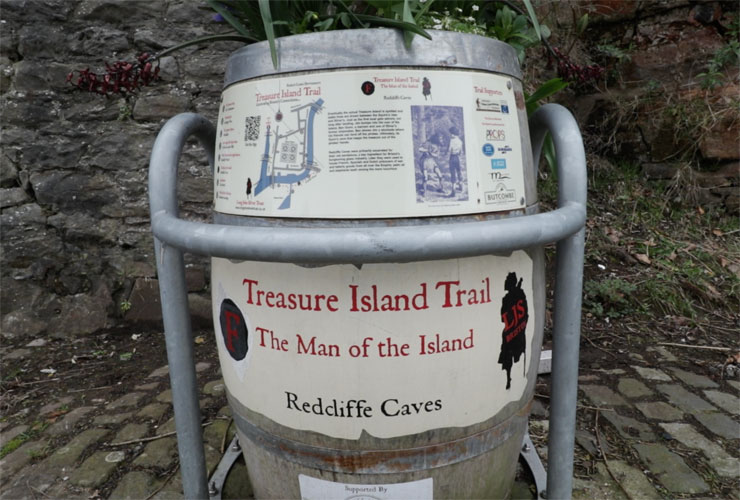
The Redcliffe Caves stretch for 3 acres underground, the caves were used to excavate glass for the Bristol glass industry and they were a cool place to store cargo unloaded from neighbouring Redcliffe wharf.
There are also stories of smugglers who hid their loot in the recesses of the cave. Unfortunately, there are no tours of Redcliffe Cave at the moment but hopefully, they will resume in the future.
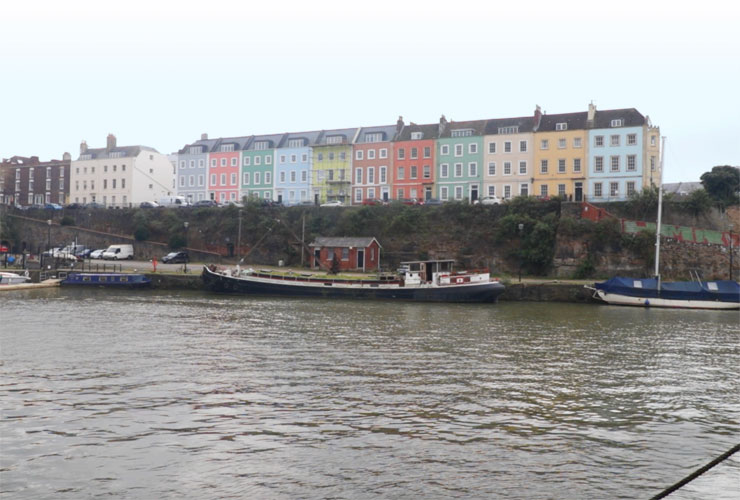
These are just a few of the stops on the Bristol quayside audio tour. We’ll leave you to discover the other pirate tales for yourself. The Bristol audio tours take about 1 to 2 hours to complete depending on how long you stop and are definitely worth giving a go.




Durell Trago
April 10, 2021 at 1:50 pmThanks so much for the tour! My ancestors came to Maryland, USA in the 1680s sailing out of Bristol. The two Trego brothers captained ships filled with Quakers seeking freedom in America.
From Maryland they travelled to Pennsylvania and then eventually to central Ohio in the 1840s.
We still have groups of Quakers in the area today.
Mr and Mrs W
April 10, 2021 at 6:33 pmGlad you enjoyed. It sounds like a very interesting family story.